Summary: Markelle Fultz, the former No. 1 pick, has rebuilt his career with the Orlando Magic after a mysteri
Markelle Fultz dribbles left, plants his foot, and rises. The jumper looks clean—elbow tucked, release high. For a split second, the gym in Orlando falls silent, waiting for the swish. It doesn't come. The ball clanks off the back iron. Fultz jogs back on defense, expressionless. That miss, in a random January game against the Hornets。felt like a microcosm of his career: flashes of brilliance, followed by a frustrating clank.Remember the hype?
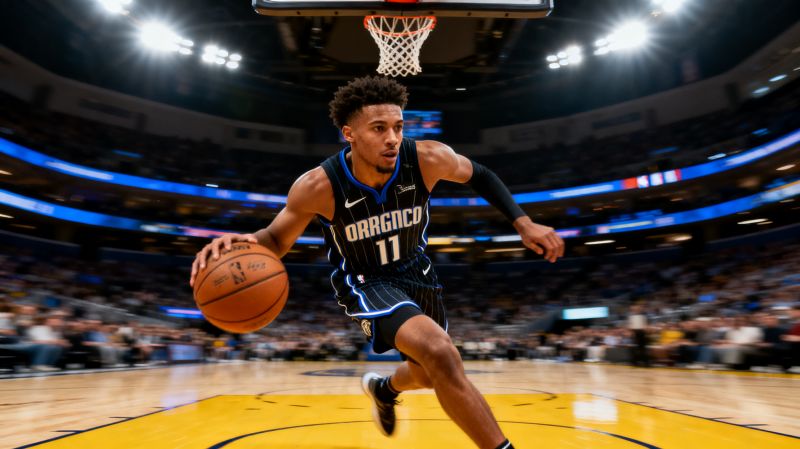
The 2017 NBA Draft。where Fultz went No. 1 to Philadelphia ahead of Jayson Tatum and Donovan Mitchell. He was supposed to be the next great point guard—a 6'4" combo guard with shiftiness, vision, and a mid-range game that seemed unguardable. Then came the shoulder injury, the mysterious diagnosis, the yips. His jump shot vanished. Not just statistically—visually. He’d hesitate at the free-throw line, pump-faking in empty gyms. The Sixers traded him to Orlando in 2019, and most fans wrote him off as a bust. I did too, honestly. But watching him now, there's something stubbornly compelling about his refusal to disappear.Fultz reinvented himself in Orlando. The shot still isn't pretty—he shot 31% from three last season, and defenses dare him to fire away. Yet he's become a crafty finisher around the rim (65% within three feet, a career high) and a pest on defense. His assist-to-turnover ratio improved to 3.1。and he quietly posted 14 points and 5.7 assists per game. Not star numbers, but winning ones. The Magic made the playoffs last year, and Fultz was a steady hand in the fourth quarter. He's not the savior Philadelphia drafted. He's a role player who knows his limitations—and that self-awareness is oddly rare for a former No. 1 pick.The shoulder injury remains a medical mystery. Doctors couldn't agree on a diagnosis;some speculated it was thoracic outlet syndrome, others said it was psychological. Fultz has never fully explained it, and maybe he can't. What's clear is that the injury robbed him of the one skill that justified his draft position: shooting off the dribble. Without it, he had to rebuild his game from scratch. Most players never recover from that kind of loss. Fultz did。in his own way. He's not a cautionary tale—he's a case study in adaptation.Now 25。
Fultz enters a critical season. The Magic have a crowded backcourt with Jalen Suggs and Cole Anthony, and his contract expires next summer. He could be trade bait, or he could be the veteran glue on a young team. I'd bet on the latter. There's a quiet toughness to him—a willingness to grind when the spotlight has moved on. The jump shot may never return. But Markelle Fultz has already proven he belongs in the league, even if it's not the way anyone imagined. That's not a happy ending. It's an honest one.