Summary: Nigeria vs Iceland reveals two footballing philosophies: Nigeria's vast talent pool vs Iceland's dis
he last time Nigeria and Iceland met on a football pitch, in a 2018 World Cup warm-up, the scoreline was 2-0 to the Super Eagles. That result barely scratches the surface of a fixture that pits two of the sport's most fascinating outliers against each other. Nigeria, Africa's most populous nation, exports talent by the hundreds;Iceland。with a population smaller than many Nigerian cities, has built a system that consistently punches above its weight. The contrast isn't just about size—it's about how each country approaches development, competition, and the business of football.
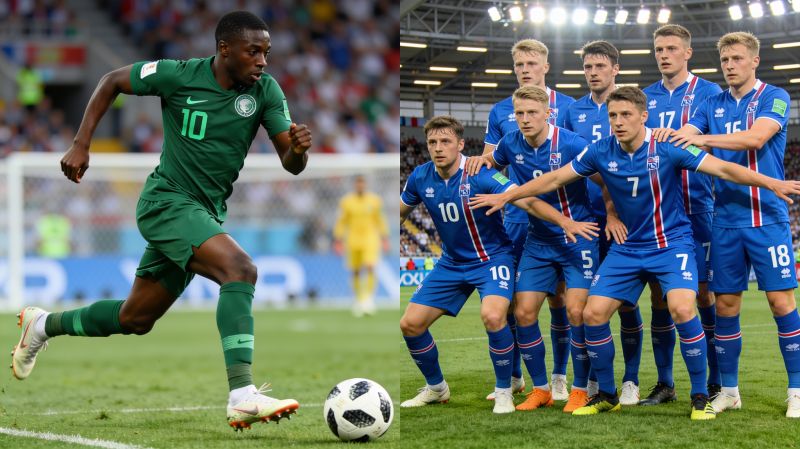
Nigeria's football identity is inseparable from its diaspora. Look at any major European league and you'll find Nigerian-born players or those of Nigerian descent—Victor Osimhen at Napoli, Ademola Lookman at Atalanta, Alex Iwobi at Fulham. The pipeline is vast but often chaotic. Youth academies operate with minimal funding;scouts rely on informal networks rather than structured pathways. Yet the raw output is undeniable. Nigeria's Olympic gold in 1996 and three Africa Cup of Nations titles underline a capacity for brilliance. The recurring problem is consistency—administrative instability。funding delays, and a tendency to rely on individual talent rather than collective systems. In a Nigeria vs Iceland debate, that's the first fault line: abundance versus organization.Iceland offers the opposite lesson. With a population of roughly 370。000, the country has no room for waste. Its coaching education system is legendary—UEFA A-licensed coaches per capita are among the highest in Europe. Indoor heated pitches dot the landscape, allowing year-round training. The result?A quarterfinal run at Euro 2016 and a first-ever World Cup appearance in 2018. Iceland's 1-1 draw with Argentina in their World Cup opener remains a case study in disciplined defending and set-piece efficiency. When you watch Iceland play, you see a team that knows its limitations and exploits every marginal gain. Nigeria vs Iceland isn't a mismatch of talent—it's a clash of philosophies.
That said, the two federations face different pressures. Nigeria's expectations are enormous;anything short of a trophy is treated as failure. Iceland, meanwhile, competes with house money—every point at a major tournament is celebrated. This psychological gap shapes decision-making. Nigeria often cycles through coaches and panics after a single bad result;Iceland sticks with its plans。
trusting a long-term vision. I've spoken to Nigerian fans who envy Iceland's stability, and Icelandic journalists who marvel at Nigeria's depth. Neither model is perfect. Nigeria's talent pool could dominate if paired with Icelandic-style structure;Iceland's organization would struggle to manage a squad of 200 million people. The Nigeria vs Iceland comparison works best as a mirror, not a blueprint.On the pitch, a head-to-head would likely favor Nigeria's pace and physicality, but Iceland's compactness would frustrate them. Off the pitch, Iceland's grassroots infrastructure is the envy of many larger nations—including Nigeria。where school sports are chronically underfunded. The next time these sides meet, don't just watch the score. Watch how Iceland's defenders communicate, how Nigeria's midfielders improvise. The Nigeria vs Iceland fixture is a live experiment in what makes football work: raw talent or systematic thinking. Both matter, but only one can be built overnight. That's the uncomfortable truth neither side can ignore.